

Reputation+



Social media monitoring helps brands protect their reputation, respond faster, and build stronger customer relationships, whether they manage 100 comments or 100,000. It gives teams a way to track conversations, identify important interactions, and take action in real time. This guide explains what social media monitoring is, how it differs from social media listening, and why it matters for customer experience, brand safety, and business results.
Key Takeaways
- Definition: Social media monitoring is the process of tracking, collecting, and analyzing real-time data to manage brand interactions.
- Monitoring vs. Listening: Monitoring focuses on daily tactical tasks (micro), while listening focuses on long-term strategic trends and strategy (macro).
- Customer Expectations: Nearly 40% of users expect a response on social media within the same day; monitoring tools help meet this demand.
- Business Impact: Effective social media monitoring can help improve conversions, strengthen positive sentiment, and protect brand reputation.
Table of contents:
What is social media monitoring?
Social media monitoring is the process of tracking, collecting, and analyzing activity across social media platforms. This can include monitoring brand mentions, reviewing comments, identifying customer questions, spotting purchase intent, and detecting harmful or spam content. It can also include acting on those insights in real time.
In practice, social media monitoring helps brands stay on top of what is happening across their channels. Many companies run ads, campaigns, and offers across multiple platforms at the same time. When engagement is strong, audiences may ask where to buy, request more information, or share positive feedback. In other cases, comment sections may remain quiet or fill up with spam, scams, or harmful content.
In either scenario, social media monitoring helps you build workflows to respond faster, manage risk, and maintain a healthier online community. It gives teams the structure to identify customer questions, spot purchase intent, detect spam or harmful content, and understand sentiment at scale. Many brands use social media monitoring tools to turn high volumes of social interactions into clear, actionable insights and more efficient workflows.
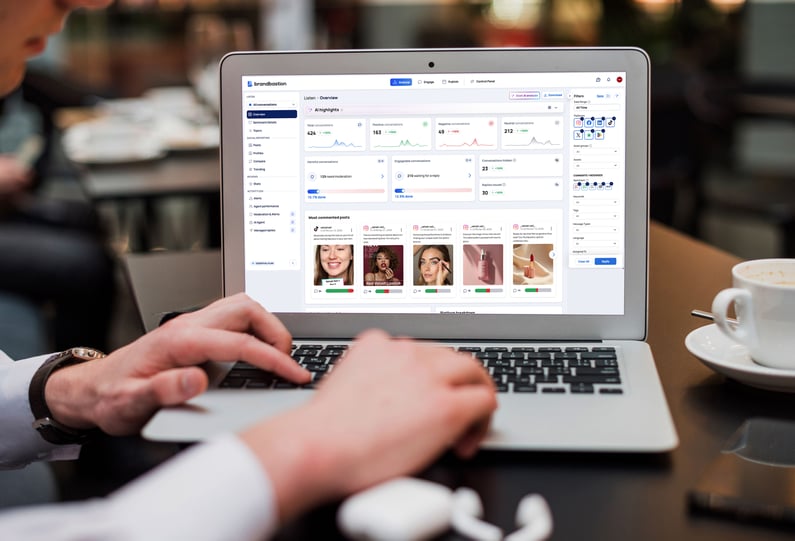
Platforms like BrandBastion help teams monitor and moderate conversations in real time, so they can protect their communities and respond to what matters faster.
Is there a difference between social media monitoring and listening?
Social media monitoring and social media listening often come up together, but they serve different purposes. At first glance, the distinction between these terms isn't always clear.
Social media monitoring focuses on real-time, tactical work. It helps teams manage day-to-day interactions by tracking mentions, reviewing comments, responding to questions, filtering spam, and escalating urgent issues. It is about what is happening right now and what action needs to be taken.
Social media listening is broader and more strategic. It focuses on long-term patterns in online conversations, such as recurring themes, shifts in sentiment, audience perception, and emerging trends. These insights can help shape campaigns, messaging, product decisions, and customer experience strategy over time.
A simple way to think about it is this: social media monitoring is the micro view, while social media listening is the macro view.
The two work best together. Monitoring gives brands real-time visibility into conversations as they happen, while listening helps them understand what those conversations mean over time. Without monitoring, teams may miss important interactions. Without listening, they may miss larger patterns that should influence strategy.
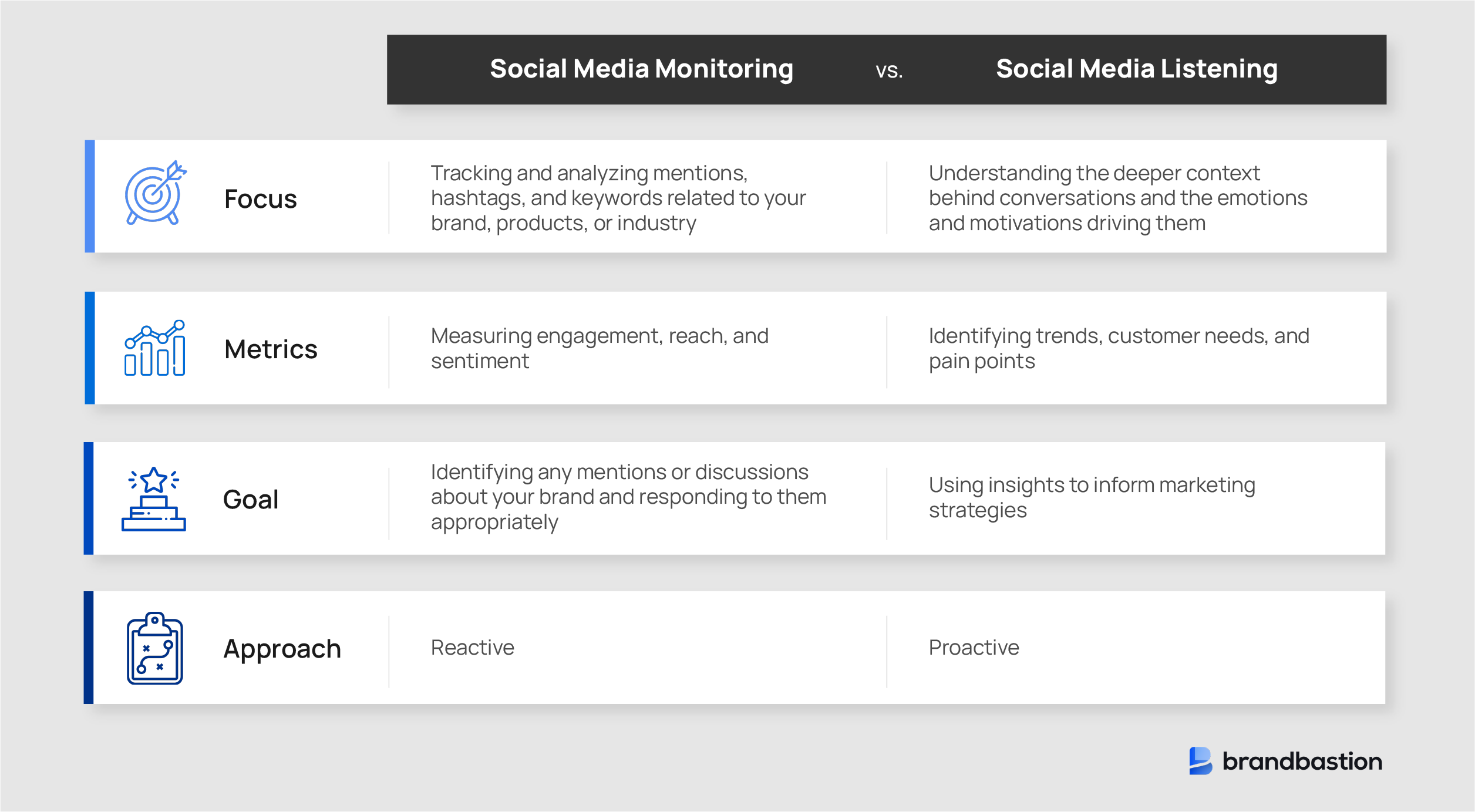
Differences between Social Media Monitoring and Social Media Listening
What are the benefits of social media monitoring?
Social media monitoring can deliver measurable business value. It helps brands improve response times, protect their reputation, identify customer needs, and uncover insights that support both marketing and customer experience.
Many companies use monitoring tools to execute their strategy more efficiently. These tools can help teams:
- Answer questions and comments
- Search for relevant keywords and brand mentions
- Analyze sentiment
- Identify purchase-intent conversations
- Observe trends in audience behaviour
- Take action in urgent situations
- Measure social ROI (Return on Investment)
- Filter out spam, scams, and harmful content
Here's a concrete example: responding to questions and comments quickly can directly impact your conversion rates.
Meet customer expectations with faster responses
Fast response times matter on social media. According to a survey on expected response time for social media questions or complaints, 18% expect an immediate response to questions or complaints on social media. In addition, 28% expect a response within an hour, and 37% expect an answer during the same day.
When brands can quickly spot questions that signal purchase intent, they have a better chance of converting interested users directly from social media. Social media monitoring tools can help teams identify and categorize these interactions faster, making it easier to prioritize the conversations that matter most.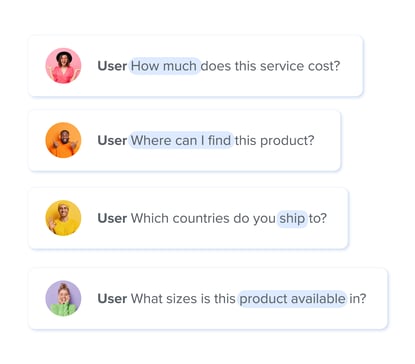
Quick, AI-assisted responses can also help brands manage social media at scale while meeting rising customer expectations.
To measure the impact of comment management, BrandBastion ran an A/B test with Mindvalley to see how responding to engageable conversations affected performance. In the campaign where consumer questions, complaints, and community comments were actively answered, Mindvalley saw a 54% increase in conversion rate and a 47% increase in purchases.
Example of a successful social media monitoring implementation
Here's how one university used social media monitoring to increase positive sentiment and drive enrollment.
Purdue University case study on increased positive sentiment and engagement
Higher education institutions increasingly use social media not just to advertise, but to understand their audience, strengthen their community, and support enrollment goals. Purdue University is one example.
With more than 1 million followers across social media, Purdue needed a way to monitor conversations at scale, understand sentiment, and maintain a safe, inclusive community. The university shares daily content about campus life and wanted to stay responsive while keeping its channels healthy and civil.
By using BrandBastion to monitor and moderate conversations in real time, Purdue gained better visibility into campus discussions and stronger insight into how audiences responded to its content. These insights helped the team optimize its strategy while building a more positive and engaged community.
.png?width=565&height=512&name=purdue-university-brandbastion-intelligence%20(1).png)
Purdue University's dashboard
As a result, Purdue reported:
Why social media monitoring is essential for a healthy online presence
Social media monitoring is essential for any company with an active social media presence, regardless of size or industry. It helps brands stay responsive, protect their communities, and turn day-to-day interactions into valuable business insight.
With the right structure, strategy, and tools, social media monitoring can support measurable outcomes, from faster response times and stronger customer experience to improved brand sentiment and higher conversions. It also helps brands reduce risk by identifying spam, scams, and harmful content before they damage trust or derail conversations.
For brands that want to grow on social media without losing visibility or control, social media monitoring is no longer optional. It is a core part of maintaining a healthy online presence.